
Over 12 years ago, I was fascinated by the rapidly emerging 3D technologies that were evolving within the creative community. As an educator, I was one of the first instructors in Texas to introduce these immersive experiences within my classroom. I wrote and received grants for 3D printers and a Google Expedition kit, but quickly realized that the creation of these 3D assets was the “next big thing.” When we entered the creation phase, my love of 3D, virtual, and augmented reality escalated.
Adoption of VR technology and training has been slow; this is due to the lack of creators capable of producing these assets, which are often extremely expensive. Within the confines of public education, I had to be resourceful. I quickly became a leader in educational AR/VR production using low-cost, image-editing programs. I introduced both Autodesk and Adobe software to students as young as 12 with successful results; my students will be the next generation of VR creators.
As the cost of VR production software has decreased, I’ve not only increased my skills in this area, but I have also shared tips, tricks, and tutorials with fellow educators. I am an industry-recognized expert in 360-degree virtual simulations. These static, immersive modules allow a user to look around a virtual space with or without VR goggles. Additional interactivity can be economically incorporated into the space using third-party apps such as Thinglink, while interactive assessments can be delivered in Adobe Captivate. Complex, advanced interactions, simulations, and assessments can be combined into a fully virtual space that the user can move within using Unity 3D software. I have not only created these module assets myself, but I am proud to say that I have instructed others within the process as well.
Interactive Modules
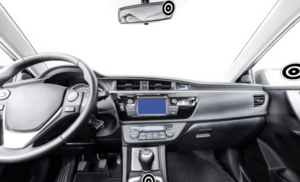
This interactive module was created as part of an online driver’s education course for Conroe ISD. Students must correctly identify the required items to complete before they can turn on the car. This interactive assessment will not allow the car to “start” until they correctly identify all of the required items. This module was rapidly developed as an assessment solution immediately after the COVID-19 pandemic required the schools to close in 2020. The module was designed in Adobe Captivate and deployed within the Canvas Learning Management System.
Click here to see full interactive graphic
Virtual Training Space
As part of the Texas Commission on Law Enforcement continuing education requirements, Texas Peace Officers are required to complete professional development hours to maintain their credentials. However, many smaller agencies do not have the funding or manpower to spare; sending officers to the nearest training hub can cost departments thousands of dollars and leave rural areas short-staffed. Montgomery County Precinct 3 Constable’s office recognized the value of online training; not only were they able to fully train their entire staff virtually, they saved money in travel expenses while maintaining full coverage on the street.
This module was designed to help detectives search for clues on a crime scene while outlining proper evidence handling techniques. The virtual assessment was deployed within the Canvas Learning Management System. Officers must pass the assessment before progressing through the training.
Skills Used
- Adobe Photoshop
- 360-degree Photography
- Adobe Audition
- Adobe Preimere Pro
- Thinglink (embedded in LMS via iFrame code via HTML interface)
- Adobe Captivate (SCORM-modules)
- Canvas Learning Management System